Camino Primitivo: The Original Way from Oviedo to Santiago
Galicia, Walking & Cycling Holidays in Spain
16 days / 15 nights
Tour Gallery Viewer
Price On Request
16 days / 15 nights
- Rest in a handpicked selection of traditional village hotels, comfortable rural guesthouses, and 3-star city hotels with en-suite bathrooms
- Walk unencumbered with reliable daily luggage transfers (1 bag up to 20 kg per person) between all accommodations
- Navigate confidently with detailed walking notes and route maps provided in English, plus 24-hour local emergency support
- Includes strategic daily taxi transfers in remote mountain stages (Grado and Pola de Allande) to ensure comfortable overnight stays
Introduction
Cross the wild mountains of Asturias and Galicia on Spain's oldest Camino.
Follow the oldest pilgrimage route to Santiago de Compostela on this 16-day self-guided journey through the mountains and rural landscapes of northern Spain.
The Camino Primitivo traces the route traditionally associated with King Alfonso II of Asturias, who travelled from Oviedo to Santiago in the 9th century after the discovery of the tomb believed to be that of St James. More than a thousand years later, the Original Way remains one of the Camino’s most rewarding and atmospheric routes.
From Oviedo, walk deep into Asturias through forested valleys, high mountain passes, remote hamlets and open pastureland. Cross the rugged Cantabrian Mountains, tackle the spectacular Camino de los Hospitales and descend into Galicia, where ancient paths lead towards the Roman-walled city of Lugo. Beyond Lugo, the route eventually joins the Camino Francés at Melide for the final pilgrimage into Santiago.
Daily stages range from approximately 15 to 32 km across mountain trails, farm tracks, woodland paths and quiet country roads. More demanding than many other Camino routes, the Primitivo rewards the effort with magnificent scenery, fewer crowds and a wonderful sense of connection with the history of the pilgrimage.
The full journey can be walked from Oviedo to Santiago, or divided into two stages: Oviedo to Lugo and Lugo to Santiago.
- The Original Camino: Follow the historic route traditionally taken by King Alfonso II on the earliest recorded pilgrimage to Santiago.
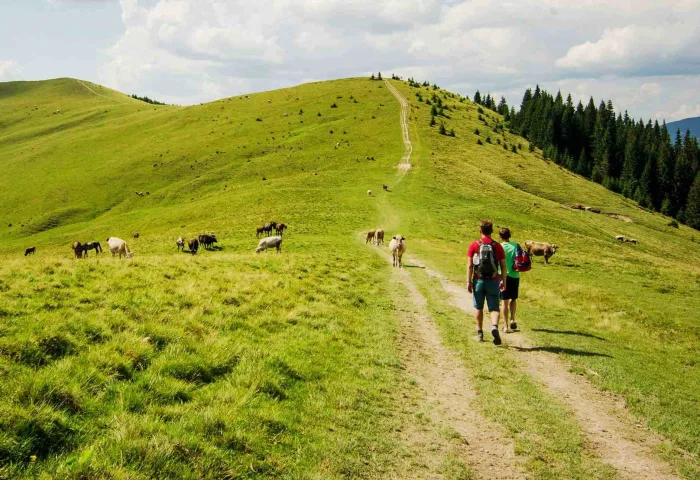
- Camino de los Hospitales: Cross one of the Primitivo's most memorable high-level mountain sections, with expansive views across the Asturian landscape.
- Asturias & the Cantabrian Mountains: Walk through wooded valleys, mountain passes, traditional villages and remote high pastures.
- Roman Lugo: Enter the historic city of Lugo, famous for its remarkably preserved Roman walls and centuries of Camino heritage.
- Northern Spain's Food & Culture: Experience the distinct traditions of Asturias and Galicia, from hearty regional cuisine to the villages and historic towns along the trail.
- Arrival in Santiago: Join the Camino Francés for the final stages and complete your journey at the Cathedral of Santiago de Compostela.
At A Glance
Tour Type
Self Guided
Duration
16 days / 15 nights
Activity Days
14 days
Level
Moderate to Challenging
Avg. Daily Distance
23 km
Most Enjoyable Months
may, jun, sep
Arrival/Departure Town
Oviedo / Santiago de Compostela
Journey Highlights

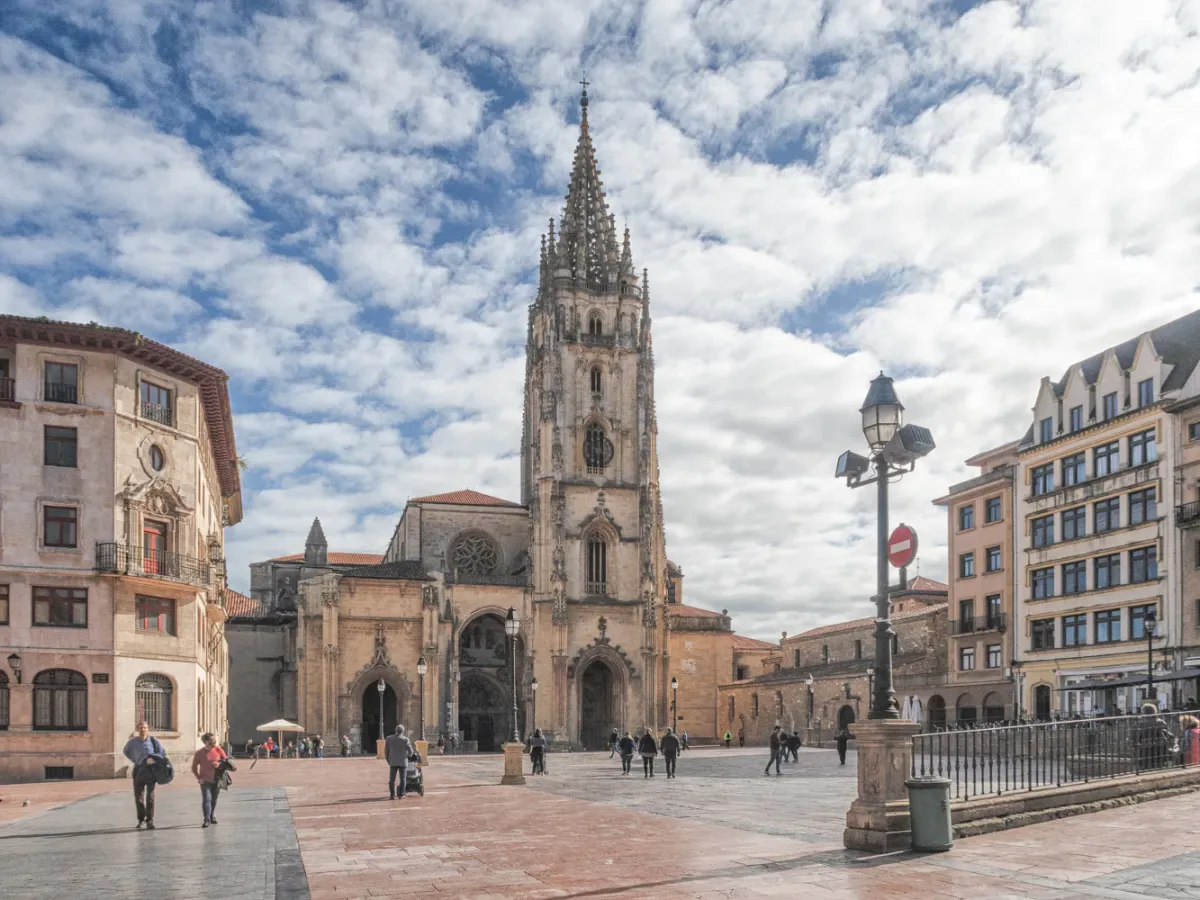
Oviedo Cathedral
Start at the Cathedral of San Salvador, a profoundly important historic sanctuary for early pilgrims.

Embalse de Salime
Drop 900m in just 7km to cross this spectacular mountain reservoir and dam.

A Fonsagrada
Visit the town where St. James allegedly performed a miracle, turning fountain water into milk.

Lugo's Roman Wall
Stroll along the 2km ancient Roman wall that entirely encircles Lugo's historic centre.

Santa Eulalia de Bóveda
Discover fascinating early medieval paintings inside this national monument near Lugo.

Melide & The French Way
Join the bustling French Route in Melide, a town famous for its traditional octopus dishes (pulperías) and aniseed cakes.
Brief Itinerary
Day
Route
Meals
Distance
Elevation
Time
Activity
Day 1
Arrive in Oviedo
-
Check In
Day 2
Oviedo to Grado
B
28 km | 17 mi
Walking
Day 3
Grado to Salas
B
23 km | 14 mi
Walking
Day 4
Salas to Tineo
B
22 km | 14 mi
Walking
Day 5
Tineo to Pola de Allande
B
31 km | 19 mi
Walking
Day 6
Pola de Allande to La Mesa
B
20 km | 12 mi
+600 m
Walking
Day 7
La Mesa to Grandas de Salime
B
18 km | 11 mi
−900 m / 7 km
Walking
Day 8
Grandas de Salime to A Fonsagrada
B
28 km | 17 mi
Walking
Day 9
A Fonsagrada to O Cadavo
B
26 km | 16 mi
Walking
Day 10
O Cadavo to Lugo
B
32 km | 20 mi
Walking
Day 11
Lugo to A Ponte Ferreira
B
29 km | 18 mi
Walking
Day 12
A Ponte Ferreira to Melide
B
20 km | 12 mi
Walking
Day 13
Melide to Arzúa
B
15 km | 9 mi
Walking
Day 14
Arzúa to Rúa
B
19 km | 12 mi
Walking
Day 15
Rúa to Santiago de Compostela
B
19 km | 12 mi
Walking
Day 16
Departure from Santiago
B
Check Out
Day 1
Arrive in Oviedo
Day 1
Arrive in Oviedo
Meals
-
Distance
Elevation
Time
Activity
Check In
Day 2
Oviedo to Grado
Day 2
Oviedo to Grado
Meals
B
Distance
28 km | 17 mi
Elevation
Time
Activity
Walking
Day 3
Grado to Salas
Day 3
Grado to Salas
Meals
B
Distance
23 km | 14 mi
Elevation
Time
Activity
Walking
Day 4
Salas to Tineo
Day 4
Salas to Tineo
Meals
B
Distance
22 km | 14 mi
Elevation
Time
Activity
Walking
Day 5
Tineo to Pola de Allande
Day 5
Tineo to Pola de Allande
Meals
B
Distance
31 km | 19 mi
Elevation
Time
Activity
Walking
Day 6
Pola de Allande to La Mesa
Day 6
Pola de Allande to La Mesa
Meals
B
Distance
20 km | 12 mi
Elevation
+600 m
Time
Activity
Walking
Day 7
La Mesa to Grandas de Salime
Day 7
La Mesa to Grandas de Salime
Meals
B
Distance
18 km | 11 mi
Elevation
−900 m / 7 km
Time
Activity
Walking
Day 8
Grandas de Salime to A Fonsagrada
Day 8
Grandas de Salime to A Fonsagrada
Meals
B
Distance
28 km | 17 mi
Elevation
Time
Activity
Walking
Day 9
A Fonsagrada to O Cadavo
Day 9
A Fonsagrada to O Cadavo
Meals
B
Distance
26 km | 16 mi
Elevation
Time
Activity
Walking
Day 10
O Cadavo to Lugo
Day 10
O Cadavo to Lugo
Meals
B
Distance
32 km | 20 mi
Elevation
Time
Activity
Walking
Day 11
Lugo to A Ponte Ferreira
Day 11
Lugo to A Ponte Ferreira
Meals
B
Distance
29 km | 18 mi
Elevation
Time
Activity
Walking
Day 12
A Ponte Ferreira to Melide
Day 12
A Ponte Ferreira to Melide
Meals
B
Distance
20 km | 12 mi
Elevation
Time
Activity
Walking
Day 13
Melide to Arzúa
Day 13
Melide to Arzúa
Meals
B
Distance
15 km | 9 mi
Elevation
Time
Activity
Walking
Day 14
Arzúa to Rúa
Day 14
Arzúa to Rúa
Meals
B
Distance
19 km | 12 mi
Elevation
Time
Activity
Walking
Day 15
Rúa to Santiago de Compostela
Day 15
Rúa to Santiago de Compostela
Meals
B
Distance
19 km | 12 mi
Elevation
Time
Activity
Walking
Day 16
Departure from Santiago
Day 16
Departure from Santiago
Meals
B
Distance
Elevation
Time
Activity
Check Out
Daily Journey Highlights
Day 1
Arrive in Oviedo
Day 1
Arrive in Oviedo
Arrive in Oviedo, the historic capital of Asturias and the traditional starting point of the Camino Primitivo.
Take time to explore the old quarter and visit the Cathedral of San Salvador, an important pilgrimage site long associated with travellers making their way towards Santiago.
Enjoy your first evening in this lively northern Spanish city before setting out on the Original Way tomorrow.
Airport transfers from Asturias Airport can be arranged at an additional cost.
Accommodation: Hotel in Oviedo.

Day 2
Oviedo to Grado (28 km | 17 mi)
Day 2
Oviedo to Grado (28 km | 17 mi)
Distance: ~28km
Leave Oviedo on foot and begin following the Camino west through the Asturian countryside. Pass the chapel of El Carmen at Lampajúa before descending towards Ponte de Gallegos and the River Nora.
The route soon becomes more rural, climbing steeply towards the village of Escamplero before continuing through rolling farmland and small communities. Cross the River Nalón and make your way into Grado.
At 4:00 PM, an included taxi transfer takes you to your rural accommodation for the night.
Accommodation: Hotel in Sama de Grado or Sestiello.

Day 3
Grado to Salas (23 km | 14 mi)
Day 3
Grado to Salas (23 km | 14 mi)
Distance: ~23 km
A 9:00 AM transfer returns you to Grado, where today's walk begins with a demanding climb towards Alto del Fresnu.
From the high point, the terrain gradually eases as the Camino winds through undulating farmland and traditional Asturian villages. Pass the monastery of San Salvador before reaching Cornellana, then continue through quiet countryside dotted with traditional hórreos, the distinctive raised granaries of northern Spain.
Finish in the historic town of Salas.
Accommodation: Hotel in Salas.

Day 4
Salas to Tineo (22 km | 14 mi)
Day 4
Salas to Tineo (22 km | 14 mi)
Distance: ~22 km.
Today may be shorter in distance, but the early climbing makes it a rewarding stage.
Leave Salas and steadily gain height through wooded countryside towards La Espina, following quieter paths away from the main road. From here, the Camino heads deeper into rural Asturias, where traditional villages, pastureland and forested hills define the landscape.
Continue across rolling terrain towards Tineo, one of the historic towns of the Camino Primitivo.
Accommodation: Hotel in Tineo.

Day 5
Tineo to Pola de Allande (31 km | 19 mi)
Day 5
Tineo to Pola de Allande (31 km | 19 mi)
Distance: ~31 km.
One of the longer stages of the journey takes you through increasingly remote Asturian countryside.
Follow a mixture of woodland tracks, mountain paths and quiet lanes through hilly terrain, passing scattered hamlets and the village of Vega de Rey. Long stretches of forest and open countryside give this section a wonderfully peaceful character.
The final approach to Pola de Allande includes a steep descent of around 300 metres, bringing you into this traditional mountain town surrounded by green hills.
Accommodation: Hotel in Pola de Allande.

Day 6
Pola de Allande to La Mesa (20 km | 12 mi)
Day 6
Pola de Allande to La Mesa (20 km | 12 mi)
Distance: ~20km
Today brings one of the defining mountain stages of the Camino Primitivo.
Begin with a sustained climb of around 600 metres towards Puerto del Palo, where the high point rewards you with sweeping views across the Cantabrian Mountains. From the pass, descend through wild mountain scenery and peaceful forest sections towards Berducedo and La Mesa.
Some sections underfoot can be technical, particularly on the descent, making this a demanding but memorable day.
At 4:00 PM, an included taxi returns you to Pola de Allande for the night.
Accommodation: Hotel in Pola de Allande.

Day 7
La Mesa to Grandas de Salime (18 km | 11 mi)
Day 7
La Mesa to Grandas de Salime (18 km | 11 mi)
Distance: ~18 km
A 9:00 AM transfer returns you to La Mesa for another spectacular mountain stage.
Climb towards the high ground around Aerogeneradores, reaching approximately 1,100 metres and enjoying magnificent views over the River Navia and the vast Embalse de Salime reservoir.
From here begins a long and dramatic descent of around 900 metres over just 7km towards the dam. After crossing the reservoir, climb gradually through wooded countryside into Grandas de Salime.
Accommodation: Hotel in Grandas de Salime.

Day 8
Grandas de Salime to A Fonsagrada (28 km | 17 mi)
Day 8
Grandas de Salime to A Fonsagrada (28 km | 17 mi)
Distance: ~28 km
Leave Grandas de Salime and climb steadily towards El Acebo, at approximately 1,050 metres.
The high country offers expansive mountain views before you cross from Asturias into Galicia, another major milestone on your journey to Santiago.
Continue through small rural settlements including Fonfría and Barbeitos before reaching A Fonsagrada, a historic Camino town associated with legends surrounding St James and its ancient fountain.
Accommodation: Hotel in A Fonsagrada.

Day 9
A Fonsagrada to O Cadavo (26 km | 16 mi)
Day 9
A Fonsagrada to O Cadavo (26 km | 16 mi)
Distance: ~26 km
Continue through the rolling uplands of Galicia, following a combination of forest tracks, country paths and quiet roads.
Pass A Pobra de Burón before reaching the ruins of the Hospital de Montouto, once an important refuge for pilgrims crossing this remote mountain landscape.
From here, the route continues through Calzada, A Lastra and A Fontaneira before descending towards O Cadavo Baleira, a small rural town with deep connections to the history of the Camino.
Accommodation: Hotel in O Cadavo.

Day 10
O Cadavo to Lugo (32 km | 20 mi)
Day 10
O Cadavo to Lugo (32 km | 20 mi)
Distance: ~32 km
Today is one of the longest stages, carrying you from the Galician countryside into the remarkable Roman city of Lugo.
Walk through Pradeda and rural communities where traditional architecture remains part of the landscape. Continue past Vilabade and the abandoned settlement of Soutomerille before crossing increasingly gentle farmland towards the city.
Your reward is Lugo, surrounded by its extraordinary Roman walls and one of the cultural highlights of the Camino Primitivo.
Accommodation: Hotel in Lugo.

Day 11
Lugo to A Ponte Ferreira (29 km | 18 mi)
Day 11
Lugo to A Ponte Ferreira (29 km | 18 mi)
Distance: ~29 km
Leave Lugo through the historic Porta Miña and cross the River Miño before returning to the quiet Galician countryside.
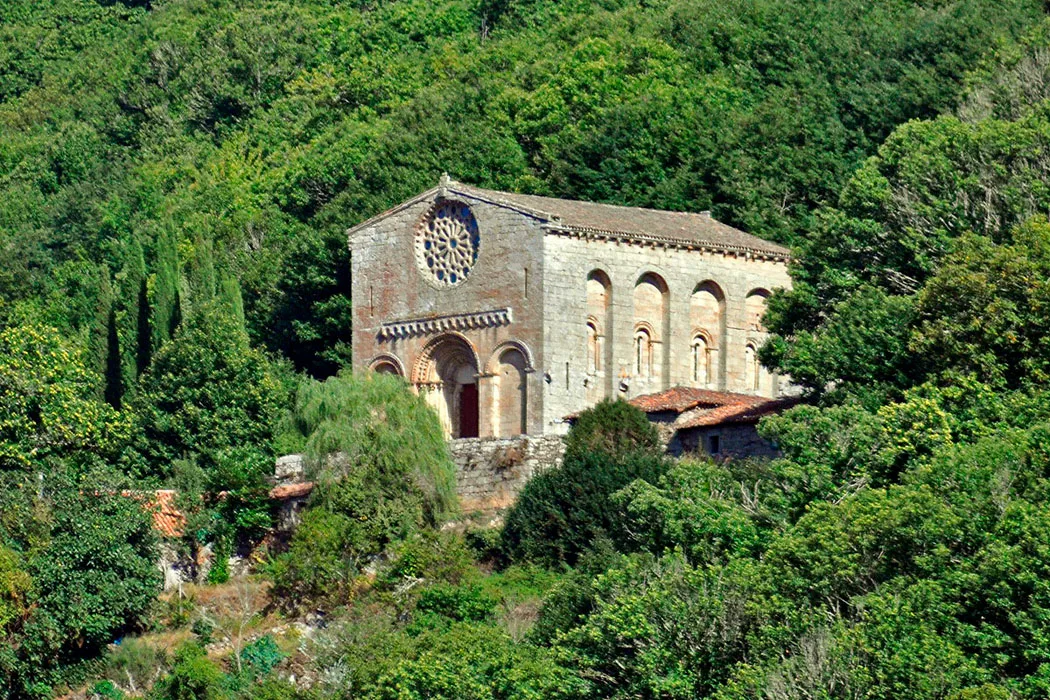
The Camino follows minor roads, farmland and woodland through scattered hamlets. Along the way, you can visit Santa Eulalia de Bóveda, known for its unusual early medieval interior and wall paintings.
Continue through San Román da Retorta before reaching the peaceful rural settlement of A Ponte Ferreira.
Accommodation: Hotel in A Ponte Ferreira.

Day 12
A Ponte Ferreira to Melide (20 km | 12 mi)
Day 12
A Ponte Ferreira to Melide (20 km | 12 mi)
Distance: ~20 km
Follow ancient country tracks through a succession of small Galician hamlets, including Seixalvo, Xende and Merlán.
The rural character continues towards Toques before the Camino reaches Melide. Here, the Primitivo meets the Camino Francés, bringing a noticeable increase in fellow pilgrims and a livelier Camino atmosphere.
Melide is also well known for its Galician cuisine, particularly pulpo, making it a fitting place to celebrate reaching this important point of the journey.
Accommodation: Hotel in Melide.

Day 13
Melide to Arzúa (15 km | 9 mi)
Day 13
Melide to Arzúa (15 km | 9 mi)
Distance: ~15 km.
Enjoy a shorter walking day as you continue along the Camino Francés through classic Galician countryside.
The route undulates gently between woodland, farms and small villages, crossing streams and quiet rural lanes along the way.
Arrive in Arzúa, a lively Camino town where pilgrims from several routes converge on their way to Santiago. With fewer kilometres today, there is plenty of time to relax and enjoy the afternoon.
Accommodation: Hotel in Arzúa.

Day 14
Arzúa to Rúa (19 km | 12 mi)
Day 14
Arzúa to Rúa (19 km | 12 mi)
Distance: ~19 km
Walk through peaceful forests and quiet country lanes as the Camino continues steadily west.
Pass traditional villages and farmland before reaching the chapel of Santa Irene, an established landmark on the pilgrimage route.
Continue through eucalyptus woodland and rural hamlets towards Rúa, a quiet settlement characterised by granite houses, stone walls and traditional Galician granaries.
With Santiago now close, anticipation begins to build for tomorrow's final stage.
Accommodation: Hotel in Rúa.

Day 15
Rúa to Santiago de Compostela (19 km | 12 mi)
Day 15
Rúa to Santiago de Compostela (19 km | 12 mi)
Distance: ~19 km
Set out on the final stage of your Camino Primitivo.
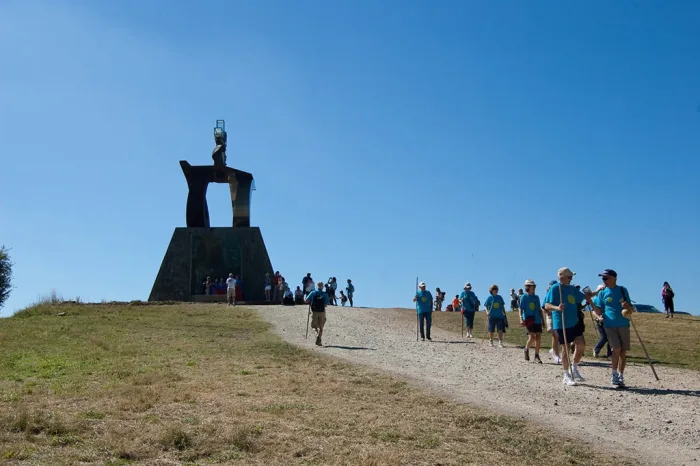
Pass through Lavacolla before climbing towards Monte do Gozo, the historic "Mount of Joy" , where pilgrims traditionally caught their first glimpse of Santiago.
From here, descend towards the city and follow the Camino through Rúa de San Pedro and into the historic centre. The narrow streets eventually open onto Praza do Obradoiro, where you arrive at the Cathedral of Santiago de Compostela and the culmination of your journey from Oviedo.
For a memorable final night, an upgrade to the Parador in Santiago can be arranged.
Accommodation: Hotel in Santiago de Compostela.

Day 16
Departure from Santiago
Day 16
Departure from Santiago
Your Camino Primitivo journey concludes after breakfast.
If time allows, enjoy a final morning exploring Santiago's atmospheric old town, revisit the cathedral or simply take in the energy of the historic centre before continuing your onward travels.
An optional day trip to Finisterre can also be added for those wishing to extend their journey to Galicia's Atlantic coast.

Inclusions
15 Nights – Village to City Stays
15 nights (for the full tour) in traditional village hotels, comfortable rural hotels, and 3-star city hotels with en-suite bathrooms.
Daily Breakfast – 15 Mornings
Daily breakfast.
Suitcase Shuttling – 20kg Cap
Daily luggage transfers between accommodations (maximum 1 bag up to 20 kg per person).
English Trail Docs + 24/7 Helpline
Walking notes and route maps provided in English, plus a local 24-hour emergency contact available every day of the year.
Strategic Transfers
Included taxi transfers on Days 2, 3, 6, and 7 to navigate remote accommodation logistics.
Exclusions
Uncovered Dining Price
Lunches, dinners, and daily drinks.
Gateway Air & Rail – Not Covered
Airfares or train travel to Oviedo, or departing from Santiago de Compostela.
Pilgrim Credentials – Pick Up Locally
Compostela certificates and Pilgrims Passports (obtained locally).
Frequently Asked Questions
How difficult is the Camino Primitivo?
The Camino Primitivo is graded as moderate to challenging. It involves walking through the Cantabrian mountains with a great deal of climbing and descending on farm dirt tracks, minor roads, and footpaths. You can expect to walk between 5 and 8 hours (18 to 32km) each day. We highly recommend doing as much walking as possible prior to your trip to prepare for the steep gradients.
Can I walk just a section of the Camino Primitivo?
Yes. We offer the Camino Primitivo in two distinct sections. You can choose to walk Stage 1 (Oviedo to Lugo) over 11 days, or Stage 2 (Lugo to Santiago) over 7 days, which qualifies you for the Compostela certificate since it covers the final 100km. Combining both creates the full 16-day original route.
How do I get the Compostela Pilgrim Certificate?
To receive the official Compostela Certificate at the Pilgrim's Office in Santiago, you must walk at least the last 100km of any Camino route. You will need to obtain a Pilgrims Passport (available in churches or pilgrim offices) and get it stamped at churches, restaurants, and hotels along the way to prove your journey.
What is the food like on the Camino Primitivo?
The gastronomic culture on this route is first-class. In the Asturias region, you will find rich, hearty stews made with oak-smoked chorizo, morcilla sausage, and fabada beans, typically served with crusty bread and local cider. Once you cross into Galicia, you must try the star tapa: Pulpo Gallego (octopus drizzled with olive oil and sweet paprika) accompanied by chilled Albariño wine.
Why is the Camino Primitivo called "The Original Way"?
The Camino Primitivo earned its title because it is historically the very first pilgrimage route to Santiago. In the 9th century, King Alfonso II of Asturias travelled from his court in Oviedo through the mountains to verify the newly discovered remains of St. James in Galicia, forging a path that millions of peregrinos would follow.
What is the Roman Wall of Lugo?
Encountered on Day 10, the city of Lugo features the best-preserved Roman wall in Europe. Stretching over 2 kilometres and completely surrounding the city's historic town centre, it is a designated UNESCO World Heritage site. You can actually stroll along the top of the wall to get a unique, elevated perspective of the city.
What is the Camino de los Hospitales?
Walked on Day 6, the Camino de los Hospitales is a remote, high-altitude trail traversing the Cantabrian Mountains near Puerto del Palo. It is named for the ruins of ancient pilgrim hospitals built centuries ago to shelter medieval travellers from the harsh mountain elements.
Can I visit Finisterre at the end of my Camino?
Yes, a day trip to Cabo Fisterra (Finisterre) is the perfect end to your Camino. We offer a guided day trip departing Santiago at 9:00 AM, allowing you to discover the dramatic and rugged coast of northern Galicia. The trip includes stops at picturesque fishing towns like Muros, the waterfall in Ézaro, the magical Sanctuary of Muxía, and finally, Cabo Fisterra—once considered the "End of the World" .
Why is the Cathedral of San Salvador in Oviedo so important to Camino pilgrims?
The Cathedral of San Salvador serves as the historical and spiritual starting point of the Camino Primitivo. It houses the Sudarium of Oviedo (the Holy Shroud), a highly venerated relic traditionally believed to have covered Christ's head after the crucifixion. Medieval pilgrims considered visiting this cathedral an essential prerequisite to completing their journey, a belief immortalized in the ancient pilgrim proverb: "Who goes to Santiago without visiting the Saviour, visits the servant but misses the Lord".
Is the Camino Primitivo crowded compared to the Camino Francés?
No, the Camino Primitivo is significantly quieter and offers a much stronger sense of solitude. It accounts for only about 5% of the total Camino pilgrim network. Because it is less traveled, you will enjoy peaceful days walking through remote forests and a much more intimate sense of camaraderie with your fellow walkers before the route finally merges with the much busier Camino Francés in the town of Melide.
When is the best time of year to walk the Camino Primitivo?
The optimal window for walking this route is between late spring (May to June) and early autumn (September) , when temperatures are mild (typically 15 - 25°C ) and the trails are clear. Walking the full route during the winter (December to March) is highly discouraged; the high-altitude Cantabrian Mountains frequently experience snow, severe storms, and freezing fog, making exposed sections like the Camino de los Hospitales dangerous or completely impassable.
What essential gear should I pack for this specific route?
Because the Camino Primitivo crosses rugged mountain ranges where weather can change rapidly, proper gear is critical. You must bring high-quality waterproofs and layered clothing to adapt to sudden temperature shifts. Sturdy hiking boots with strong ankle support are required for the rocky, technical trails, and trekking poles are highly recommended to help manage the steep, taxing ascents and descents.
What is the traditional cider ritual in Oviedo and the Asturias region?
Before you begin your walk in Oviedo, you must experience the local siderías (cider bars), particularly along Calle Gascona, affectionately known as the "Boulevard of the Cider Bars" . The true highlight is the Asturian pouring ritual known as escanciar: bartenders pour the natural cider from a bottle held high above their heads into a glass held below their waists—often without looking—to perfectly aerate the drink and awaken its flavors.
NZ Trust section
30+ Years
2 star
AUDs quote
GBPs quote

Walking
Popular
Top Choice
Self Guided
Walking & Cycling Holidays in Spain | Galicia
Camino del Norte: Spain’s Northern Coast to Santiago
Moderate to Challenging

Cycling
Popular
Top Choice
Self Guided
Walking & Cycling Holidays in Spain | Catalonia
Easy Catalonia Cycling Holiday: Costa Brava, Medieval Villages & Vineyards
Easy to Moderate

Cycling
Popular
Top Choice
Guided
Walking & Cycling Holidays in Spain | Catalonia
Southern Spain Guided Cycling Tour: White Villages & Atlantic Coast
Easy to Moderate

Cycling
Popular
Top Choice
Self Guided
Walking & Cycling Holidays in Spain | Galicia
Gems of Andalucía Guided Cycle Tour: Seville, Córdoba & Granada
Easy to Moderate

